
The legendary British playwright George Bernard
Shaw once issued a profound warning in his essay 'Freedom':
 “Nature may have tricks up
her sleeve to check us if the chemists exploit her too greedily.”
“Nature may have tricks up
her sleeve to check us if the chemists exploit her too greedily.”
Standing in the year 2026, as the world celebrates the birth centenary of the eminent British naturalist Sir David Attenborough, Shaw’s prophetic words manifest as a grim reality across the historic Sukhsagar Wetland in the Udaipur subdivision of Tripura’s Gomati district. Driven by unbridled human greed, the unregulated influx of chemical pollutants, and systemic ecological apathy, this internationally acclaimed wetland ecosystem now stands on the precipice of a catastrophic environmental collapse.
The Golden-Breasted Guest: Distinct Behavioral Traits and Recent Documentation
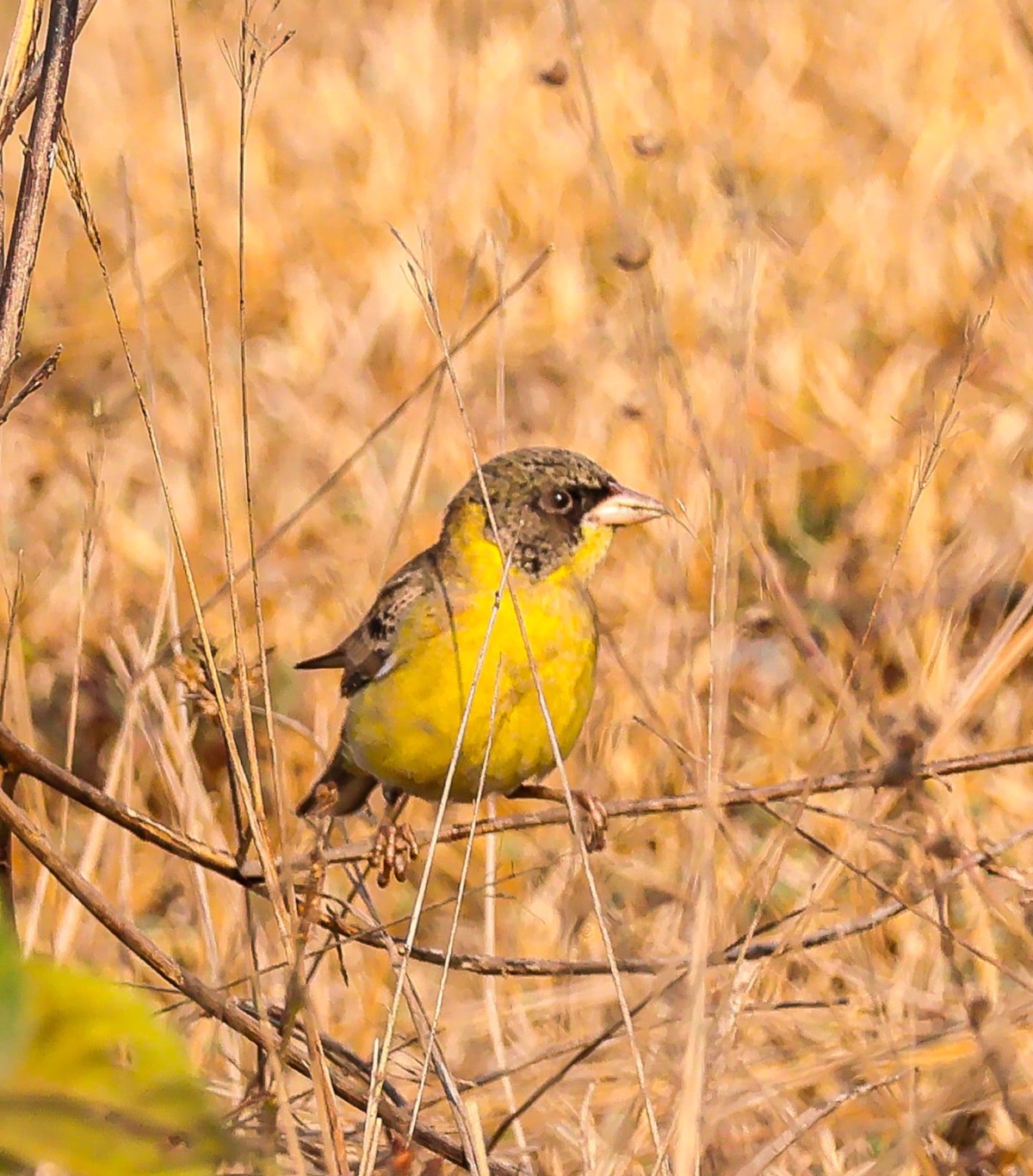
Every year, spanning from September through May or June, the vast, shimmering waters of Sukhsagar turn into a sanctuary for over 300 migratory bird species originating from the far corners of the globe. Among these seasonal travelers, the most ecologically significant is the Yellow-Breasted Bunting (Emberiza aureola)—a striking sparrow-like passerine distinguished by its vibrant golden plumage. These winter guests traditionally make landfall across the Sukhsagar basin between October and November to escape harsher climates.
Ornithologists note that the behavior of these birds is exceptionally precise and sensitive. As a highly gregarious, flocking species, their foraging patterns are inextricably linked to Sukhsagar’s unique topography—thriving primarily within its peripheral grasslands, reed beds, and low-lying paddy fields. At the break of dawn and during twilight, they descend in coordinated flocks to feed on specialized aquatic insects, native seeds, and wild grain. Their melodic, flutelike whistles and synchronized aerial murmurations have historically brought Sukhsagar’s skies to life.
The Landmark Documentation of 2026: In February 2026, amidst growing environmental apprehensions, the presence of this Critically Endangered species was successfully sighted and meticulously documented at the Sukhsagar wetland by a dedicated team of local researchers and conservationists. This recent documentation stands as irrefutable proof that despite escalating global anthropocentric pressures, Sukhsagar remains an indispensable and trusted stronghold for this rapidly vanishing species.
However, escalating human encroachment has severely fractured these natural behavioral rhythms. The Yellow-Breasted Bunting is an inherently timid and skittish bird. The relentless surge of noise pollution, mechanical clamor from surrounding agricultural activities, and intrusive artificial light pollution at night have collectively disrupted their nocturnal roosting and diurnal feeding behaviors, threatening to alter their migratory corridors permanently.
A Global Emergency: Why Are Their Numbers Plummeting?
In 2017, the International Union for Conservation of Nature (IUCN) elevated the species to 'Critically Endangered' on its Red List. By 2024, the global population was estimated to have dwindled to a meager 1,80,000 individuals. International conservationists attribute this catastrophic decline to three primary global drivers:
Rampant Illegal Poaching: Despite strict legislative bans, the species is targeted heavily along its flyways in parts of East Asia, particularly in China, where it is illegally trapped on a massive scale for the culinary market as a delicacy known as the 'rice bird.'
Systemic Habitat Loss: The bird’s critical breeding and wintering grounds—specifically natural wet meadows, reed beds, and floodplains—are being rapidly converted worldwide for urban expansion and intensive industrial agriculture.
Aggressive Agro-Chemical Interventions: The excessive deployment of chemical pesticides and herbicides across agricultural landscapes has obliterated the bird's primary food source (aquatic invertebrates and wild seeds) while subjecting the surviving population to secondary poisoning.
Localized Threats: Illegal Exploitation and the Shadow of Urbanization
While the species faces severe threats globally, the localized crisis unfolding directly within Sukhsagar is remarkably alarming. The wetland’s immediate ecosystem is being systematically dismantled by an array of human interventions:
Illegal Land Diversion and Encroachment: In flagrant violation of environmental safeguards, unscrupulous land mafias and local actors have been progressively draining, backfilling, and altering the natural contours of the Sukhsagar wetland and its low-lying flood basins. Public and ecological commons are being relentlessly encroached upon, rapidly erasing the critical shallow-water foraging grounds required by wintering birds.
Unprecedented Infrastructure Development around Udaipur Railway Station: The geopolitical and economic positioning of the wetland has accelerated its vulnerability. The unprecedented infrastructural overhaul currently underway at the adjacent Udaipur Railway Station has introduced persistent acoustic and structural disturbances, completely shattering the tranquility required by migratory avifauna.
State Government’s Master Plan for Massive Urbanization: Compounding these pressures is the state government’s long-term blueprint, which envisions a massive urbanization drive across the peripheral zones of the Udaipur Railway Station. While this mega-project—comprising commercial hubs, high-density residential blocks, and expanded transit networks—promises regional economic growth, its execution directly on the fringes of a highly sensitive ecosystem threatens to trap Sukhsagar within a concrete jungle. This looming threat of unmitigated urban sprawl stands as the final barrier that could permanently banish the Yellow-Breasted Bunting from Tripura.
Emergency Conservation Architecture: The Clock is Ticking
Sir David Attenborough taught the world that every organism in nature is bound together by an invisible, codependent thread. If the state's infrastructure and urbanization initiatives are not immediately realigned with stringent eco-sensitive and climate-resilient frameworks, Sukhsagar face imminent ecological extinction. To avert this, environmental regulators and local authorities must execute a coordinated, war-footing intervention:
Immediate Protected Status and Boundary Demarcation: Sukhsagar must be formally notified as a 'Community Reserve' or 'Protected Wetland Sanctuary' under the Wildlife (Protection) Act. Its geographic boundaries must be digitally mapped and strictly insulated from any future encroachment.
Establishment of a Rail-Urban Buffer Zone: The blueprint for the Udaipur urbanization project must be legally mandated to include a minimum 500-meter to 1-kilometer 'Green Buffer Zone' surrounding Sukhsagar. This zone should feature dense, multi-tiered acoustic green belts to act as sound and light barriers against railway and urban pollution.
Chemical-Free Agriculture Zones: The usage of synthetic pesticides and chemical fertilizers must be entirely prohibited within the wetland catchment area. Local farmers must be provided with institutional support to transition completely toward 100% Organic Farming, coupled with continuous drone-based surveillance to monitor illegal poaching and pesticide runoffs.
Development is an indisputable necessity for human progress, but it must not progress at the cost of silencing the wings of a Critically Endangered species. In this centennial year of Sir David Attenborough, the ultimate test for Tripura's governance lies in its capacity to harmonize ambitious infrastructure with uncompromising ecological preservation. Ensuring that the melodic song of the Yellow-Breasted Bunting continues to echo across Sukhsagar is no longer just a local conservation goal—it is a solemn global obligation.