Some places are carefully planned. Others simply happen.
Sanjay-Dubri was the latter.
My first visit to Sanjay-Dubri Tiger Reserve was in November 2024, almost as an afterthought—a brief break during a long road journey from Prayagraj to Raipur. At that time, this relatively lesser-known tiger reserve of Madhya Pradesh, tucked away in the forests of Sidhi district, was little more than a name on the map to me.
I certainly did not expect it to become a place I would return to again and again.
We were staying at Parsili Resort, and one evening I casually asked the caretaker, almost without any particular expectation,
“Do you have tigers here?”
His response came rather quickly—and with a hint of irritation.
“Yes, we have.”
Then he added, almost matter-of-factly,
“Sometimes we see five tigers together.”
Five tigers together?
I nodded politely, but inside, I wasn’t convinced. It sounded more like the kind of statement one hears at a wildlife destination—a little local enthusiasm, perhaps a little exaggeration.
At that point, Sanjay-Dubri was simply a convenient stopover. I wasn’t taking the place very seriously as a tiger destination.
Still, curiosity got the better of us.
We went to the ticket window and asked for a Gypsy and, more importantly, a decent guide who knew the forest well. There were no elaborate plans, no expectations of a great sighting. It was simply another safari during a long journey.
We entered the forest at around 2:45 p.m.
For the next two hours, Sanjay-Dubri gave us exactly what forests often do—silence, anticipation and very little else. We drove slowly, scanning the undergrowth, looking for movement, an alarm call, anything that might suggest the presence of a tiger.
Nothing.
Then, at around 4:45 p.m., something finally appeared.
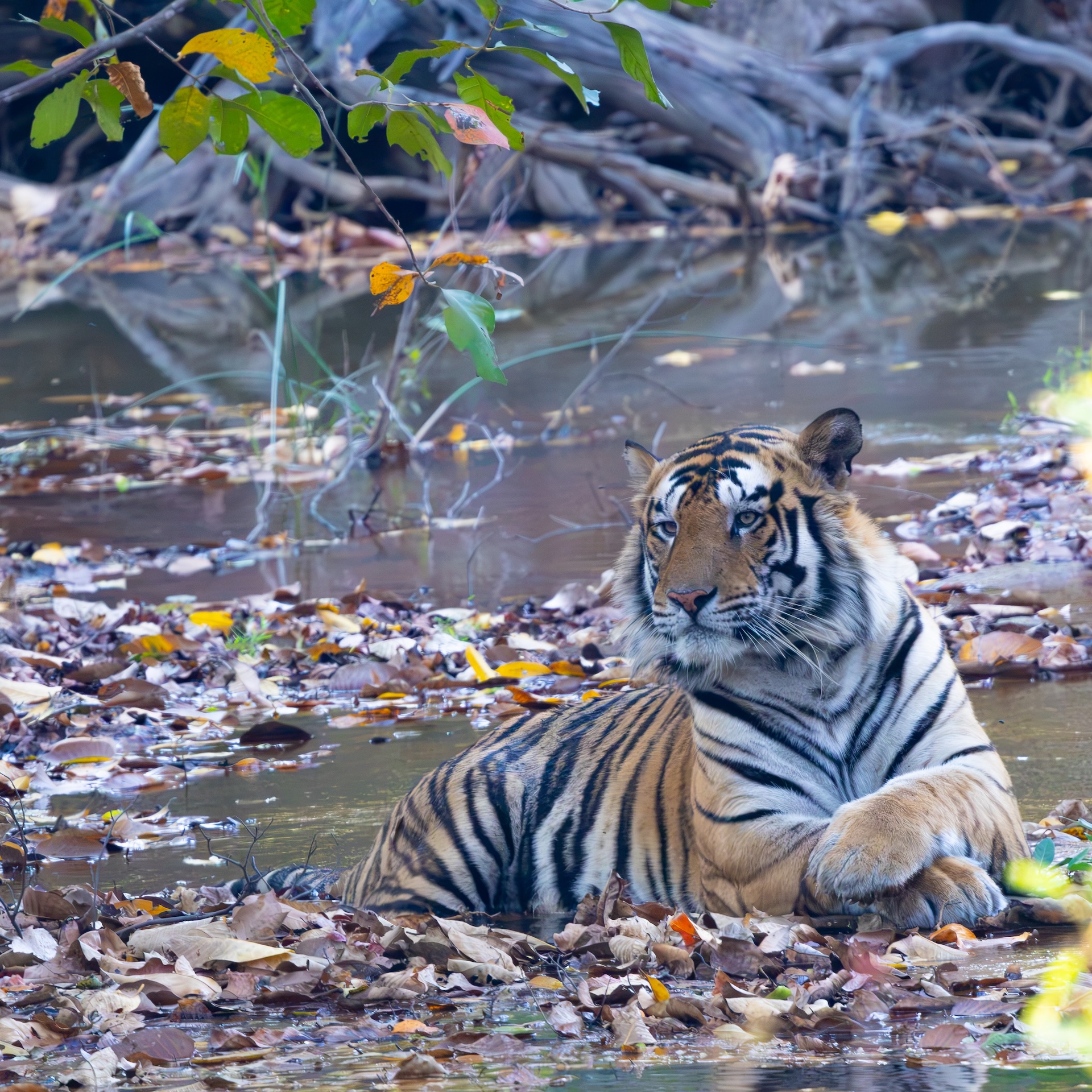
Our first tiger—a likely sub-adult—was sitting quietly on a rock some distance from our Gypsy.
There was no dramatic entrance. No roar. No chase.
Just a tiger sitting on a rock.
We watched from a distance, absorbing the sighting. Within a few minutes, it got up and disappeared into the forest.
And that seemed to be the end of it.
Or so we thought.
The forest suddenly changed
We decided to drive a little farther.
Then, almost out of nowhere, another tiger appeared.
Before we had even processed the second sighting, another followed.
This was the mother.
T17.
And then came two more.
Suddenly, the caretaker’s seemingly exaggerated statement from earlier came rushing back to me.
Five tigers.
The forest that had seemed so quiet for two hours had suddenly come alive.
The tigers were moving around our Gypsy, and for a wildlife photographer, the situation was almost absurdly overwhelming.
Which tiger should I photograph?
From which angle?
Where should I point the camera?
Every few seconds, something was happening somewhere else.
At one point, I decided to attempt something ambitious. I wanted to capture four tigers in a single video frame.
I raised the camera, looked through the eyepiece, framed the scene carefully and thought,
Bingo!
This was going to be one hell of a video.
I was completely absorbed in what I was seeing through the viewfinder.
And then the moment passed.
I looked down at the camera.
I had forgotten to turn the video recording on.
I had just watched four tigers through my camera’s eyepiece—and recorded absolutely nothing.
A classic wildlife-photographer mistake.
The camera had failed to record what my eyes had witnessed.
Fortunately, I managed to get a few photographs and some video footage later. By then, however, the winter light was fading fast. Technically, the images were far from perfect.
But honestly, who cared?
Five tigers had just been moving around our Gypsy.
For someone who had entered Sanjay-Dubri almost casually, that was an encounter I could never have imagined.
As we returned from the safari, my phone rang.
It was the caretaker from Parsili Resort.
“How was the safari?” he asked casually.
I knew exactly what he was thinking.
I smiled.
There was really only one answer.
“You were right.”
Five tigers.
Exactly as he had told me.
And then I booked another safari
The experience had barely sunk in when I made a spontaneous decision.
I booked another safari right there, on the spot.
If the first safari could produce five tigers, I wanted to know what else this forest had in store.
And Sanjay-Dubri was not finished with me yet.
Bingo!
The next safari brought us T29.
That was the moment something changed.
Sanjay-Dubri was no longer a convenient break in a road journey. It had become a place I wanted to explore.
T28 — “Mausi Maa”
Just a month later, in December 2024, came another classic encounter.
This time it was the iconic T28, “Mausi Maa,” with her four cubs.
After the chaos of five tigers moving around our vehicle during my first visit, this sighting felt different. Here, the story was not simply about numbers.
It was about a tigress and her cubs.
Watching them together offered a glimpse into a very different side of the forest—the intimacy of a tiger family, the curiosity and energy of growing cubs, and the quiet watchfulness of their mother.
By now, I was beginning to understand that Sanjay-Dubri had much more to offer than the occasional tiger sighting.
February 2025 — the sighting that still stands apart
Then came February 2025.
And T28 was there again.
With all four cubs.
This remains my best sighting at Sanjay-Dubri to date.
Everything seemed to come together.
The cubs were active and playful. T28 remained the reassuring centre of their little world. Unlike a fleeting tiger sighting that lasts only a few seconds, this was an encounter that allowed me to watch—to observe behaviour, movement and interaction rather than simply point the camera and shoot.
And, fortunately, the camera did its job this time.
I managed to capture some very good photographs and excellent video footage.
Those images remain among my most cherished memories from Sanjay-Dubri.
By then, something had changed inside me.
I wasn’t simply going there hoping to see a tiger.
I was returning because I wanted to see what the forest would reveal next.
April and May — different stories, familiar faces
In April 2025, another memorable encounter unfolded when I came across one of T17’s cubs.
Soon afterwards came another fascinating scene—a tiger sitting quietly beside a large herd of deer.
There was no chase. No dramatic action.
Yet the tension was unmistakable.
The tiger remained composed, while the deer stayed alert, constantly aware of the predator sitting among them. It was one of those scenes that reminds you that the forest does not need a kill to tell a story.
Predator and prey can occupy the same landscape, watching one another, each aware of the other’s presence.
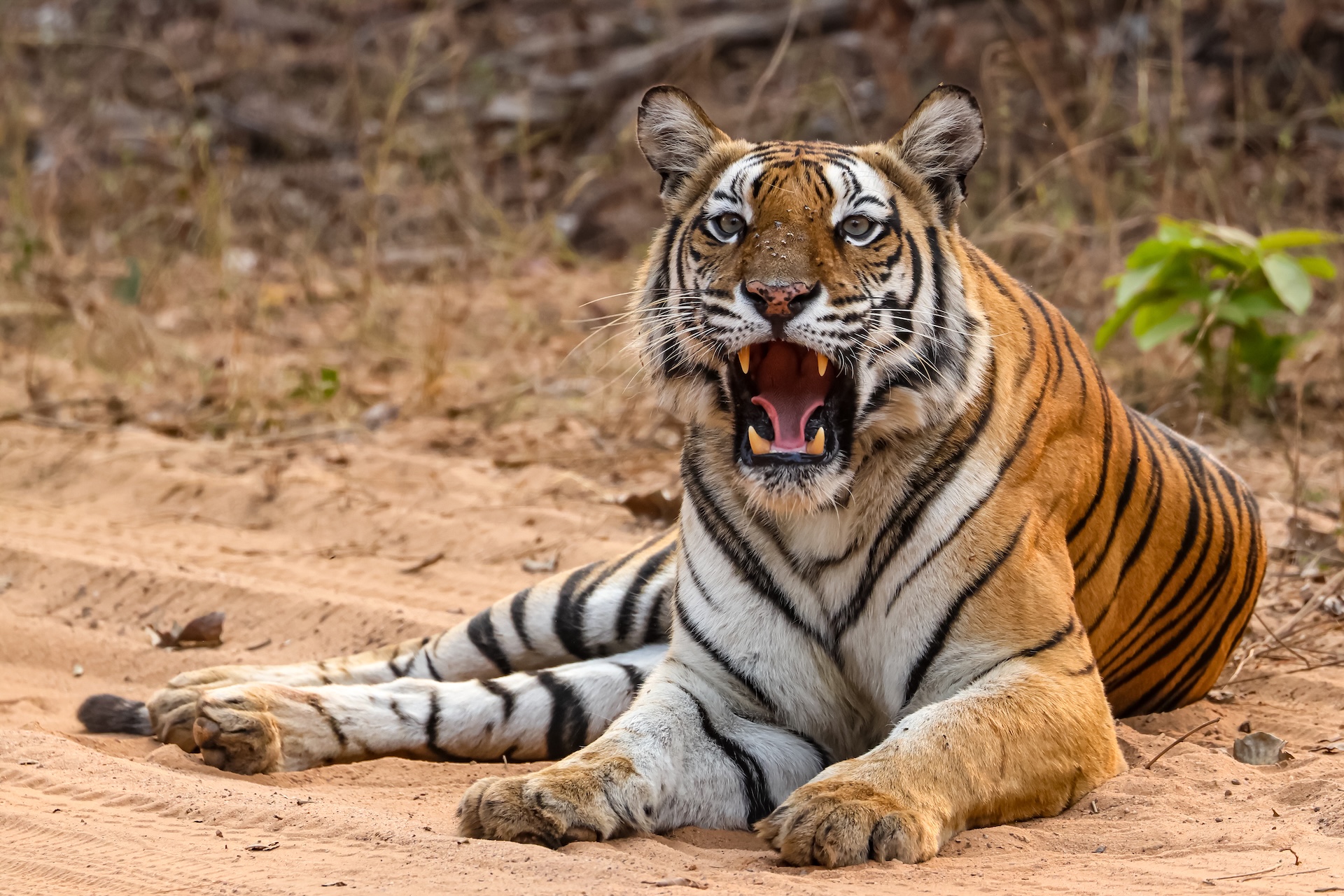
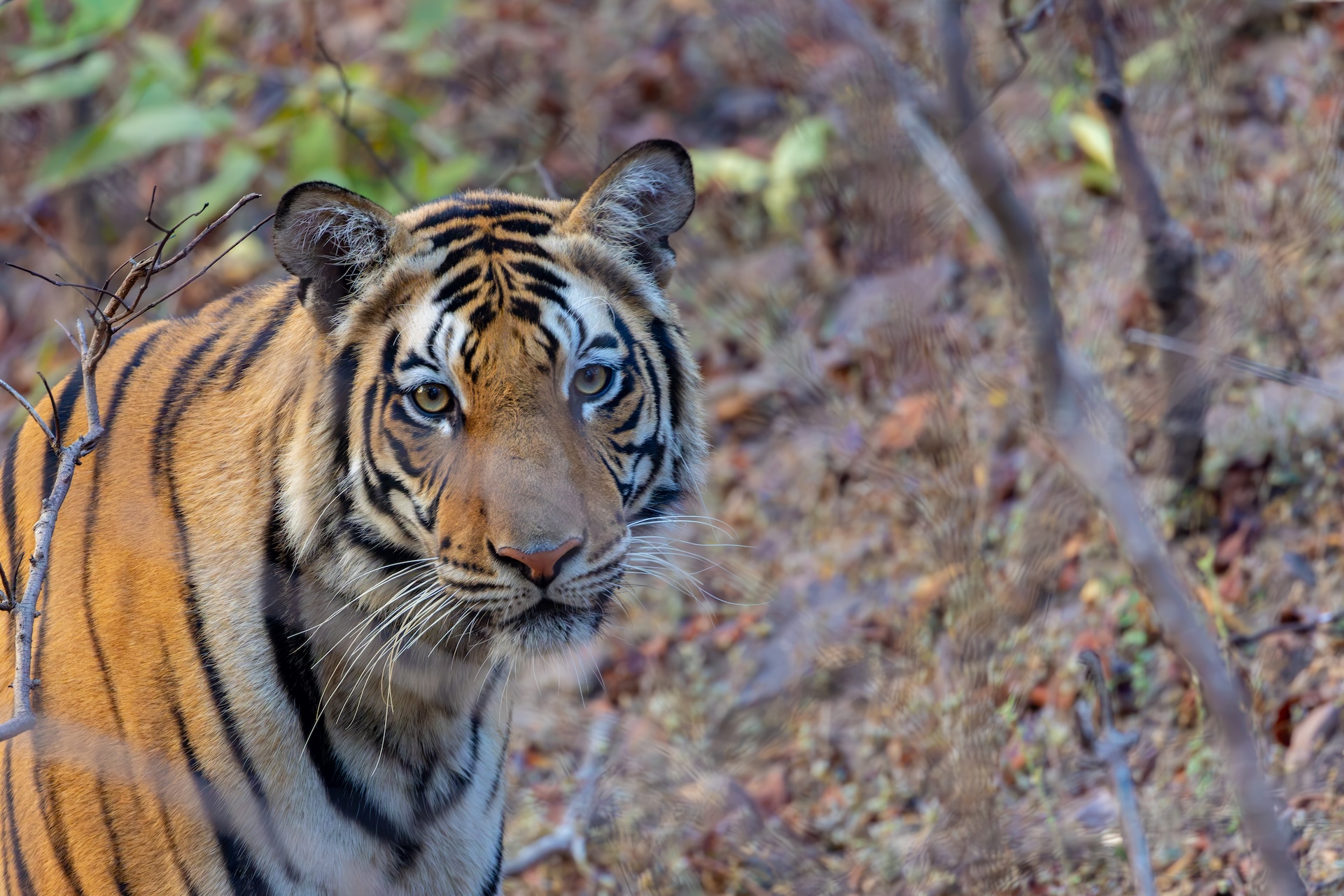
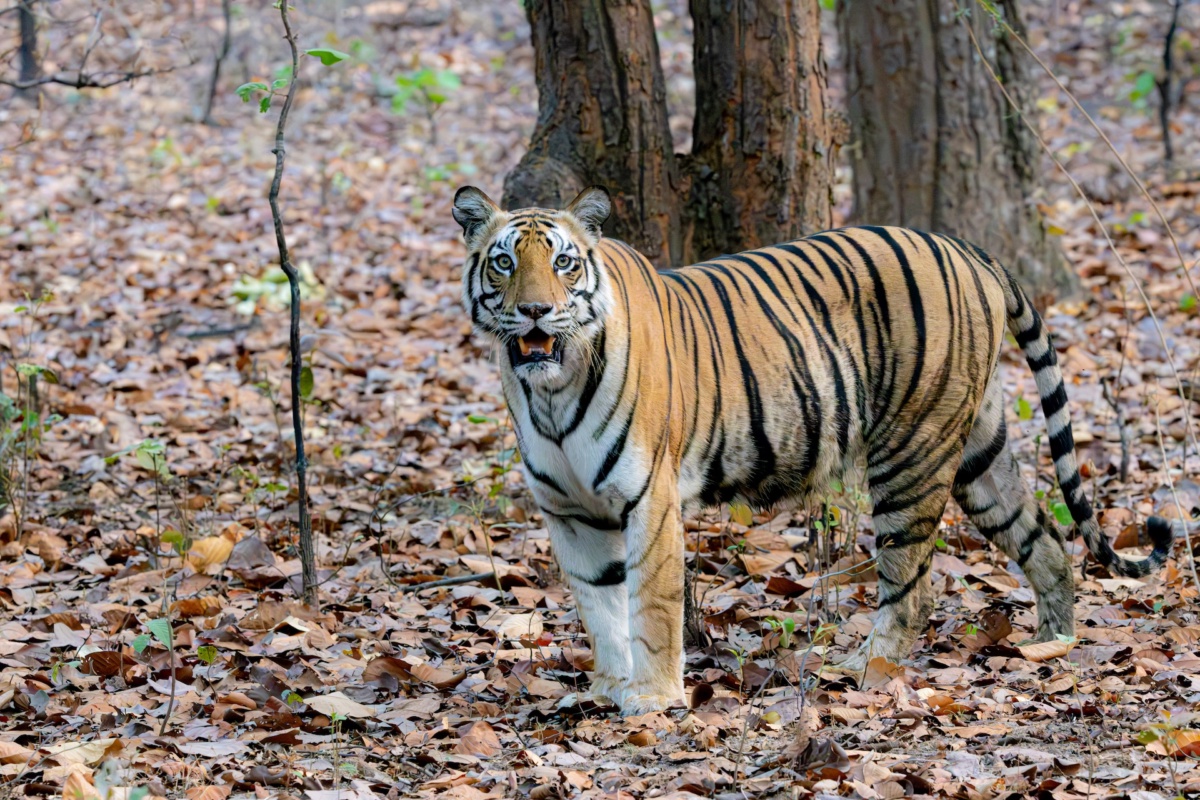
Then, in May 2025, came another encounter with T17.
This time she was sitting directly in front of us.
Completely at ease.
Looking straight towards the Gypsy.
There was no chase, no dramatic movement, nothing spectacular in the conventional sense.
Just a tiger sitting quietly in the forest.
And yet, those few minutes of direct eye contact were unforgettable.
Sometimes the most powerful tiger encounters are the simplest ones.
A tiger. A quiet forest. And a few minutes of eye contact.
December 2025 — T17 in fading light
By December 2025, I had begun to appreciate another aspect of tiger photography—the fact that not every memorable photograph is going to be technically perfect.
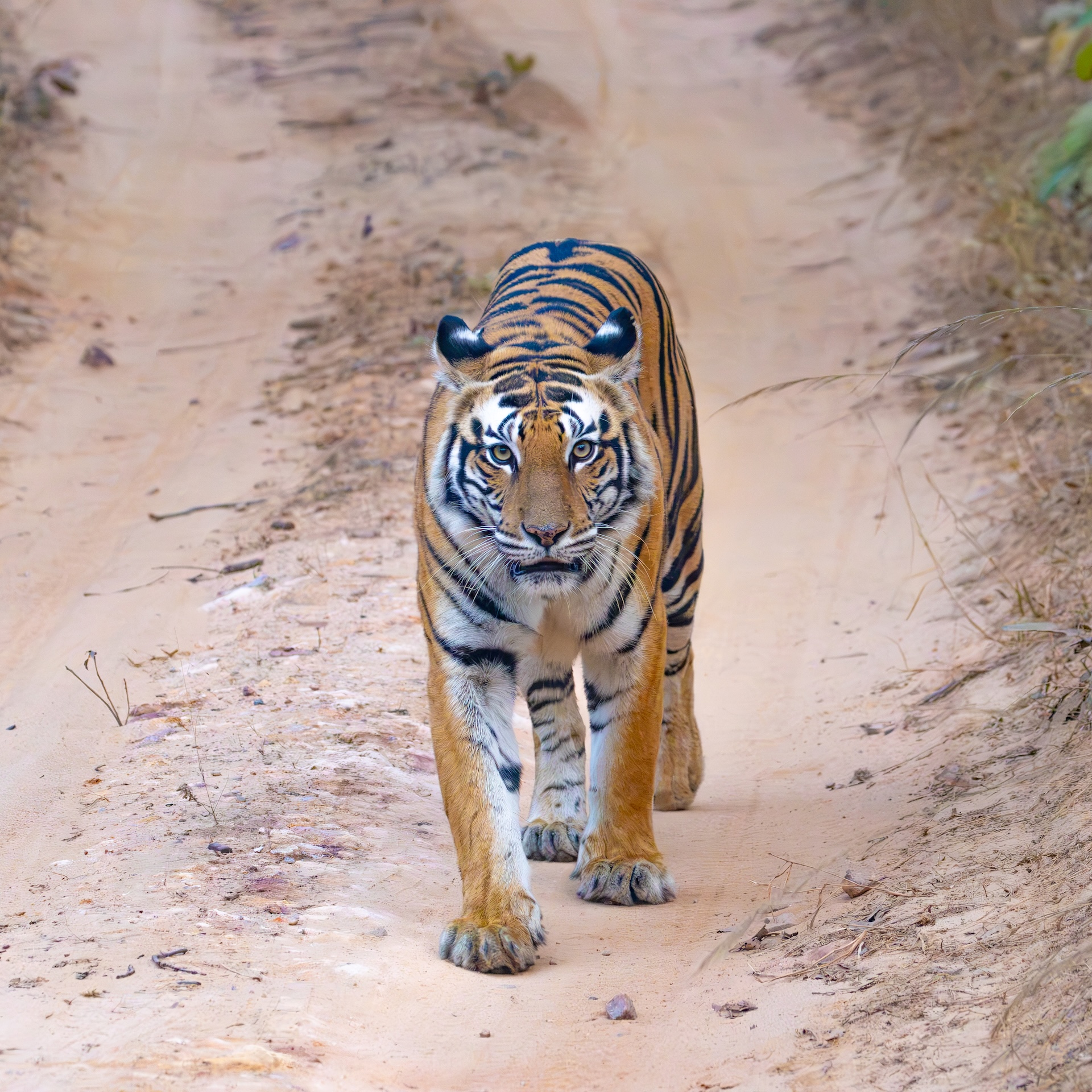
T17 appeared again, this time in very low light.
She came head-on, giving us that classic frontal view.
The light was fading rapidly. Photography was difficult. The technical quality of the photographs could never compete with an encounter in good daylight.
But the scene itself was extraordinary.
There was something almost cinematic about watching T17 approach through the dim forest.
It reminded me that wildlife photography is not always about ISO, shutter speed or perfect sharpness.
Sometimes, the memory of the encounter matters more than the quality of the file.
January 2026 — when the hunt failed
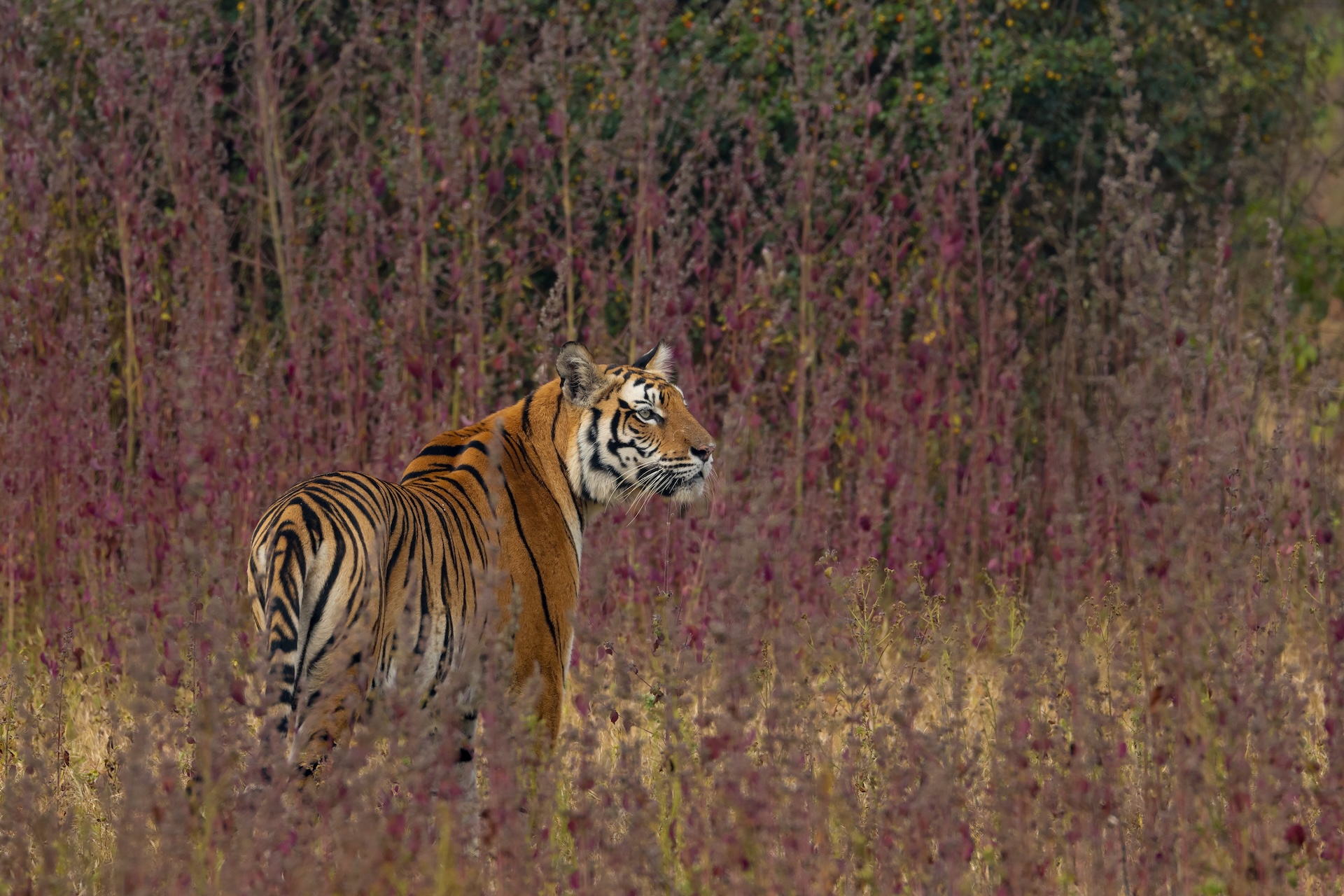
In January 2026, I encountered another litter of T28’s cubs, now older, stronger and increasingly confident in exploring the forest.
One of the young tigresses was waiting near a herd of deer.
She appeared to be watching for an opportunity.
Waiting.
Watching.
Calculating.
Eventually, she made an attempt.
But the hunt failed.
The deer got away.
What followed was almost as interesting as the attempted hunt itself.
The young tigress looked visibly frustrated. Her intense stare and expression made it seem as though she was furious with the entire forest for not cooperating.
But perhaps this is exactly how a young predator learns.
Not every hunt ends with a kill.
Every failed attempt is another lesson.
Every mistake becomes part of the process of becoming a successful hunter.
For me, it was a wonderful glimpse into the learning curve of a young tiger.
March 2026 — when Sanjay-Dubri went into overdrive
If there was one month that really tested my ability to keep the camera ready, it was March 2026.
It was simply awesome.
First came another classic head-on encounter with T17.
Then came T67.
Initially, T67 was sitting quietly in front of our vehicle. We watched her for a while, enjoying the stillness of the moment.
Then she started moving.
And came straight towards us.
Another head-on encounter.
Another unforgettable frame.
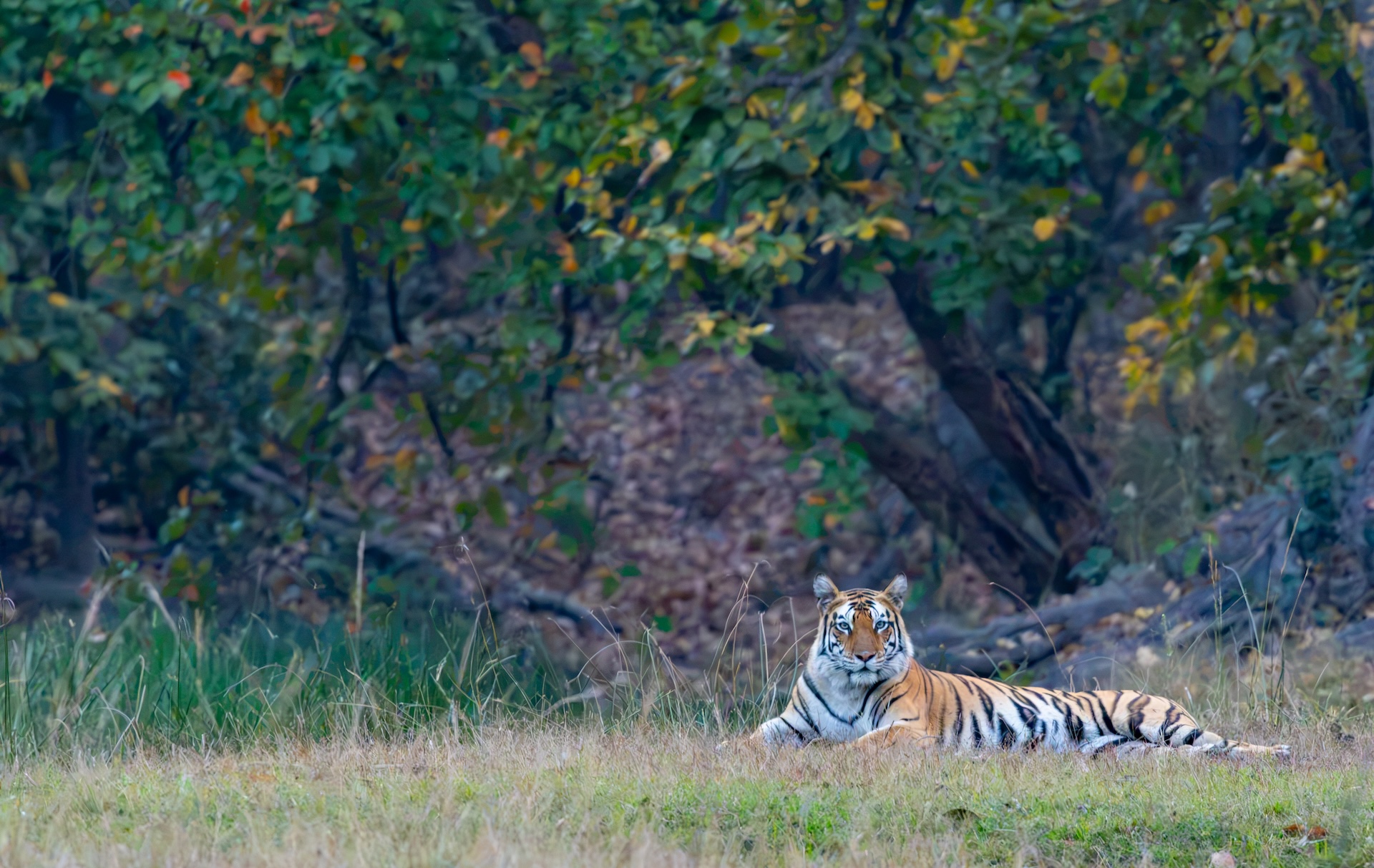
And then came T40.
Unlike the head-on encounters, T40 was sitting quietly against the forest backdrop. The setting itself became part of the photograph—the tiger framed naturally within its habitat.
Three tigers.
Three very different encounters.
And somehow, all of them in the same month.
March 2026 had been extraordinary.
June 2026 — light and shadow
By June 2026, I had become familiar with the idea that Sanjay-Dubri could present the same tiger in completely different ways.
First came T28 in fading light.
The low light made photography challenging, but it also gave the encounter an atmospheric quality.
Then came T17, this time in bright daylight.
The contrast was striking.
T28 in subdued light.
T17 in brilliant daylight.
One encounter was about mood and atmosphere; the other revealed every detail of the tiger and its powerful presence.
Two familiar tigers.
Two completely different photographic experiences.
Twenty-five safaris later
By June 2026, I had completed 25 safaris in Sanjay-Dubri.
Twenty-five safaris that had begun with a casual question:
“Do you have tigers here?”
The answer, as it turned out, was much bigger than I had imagined.
Across these safaris, the tigers were undoubtedly the stars. But somewhere along the way, I realised that the reserve’s real character could not be measured by tiger sightings alone.
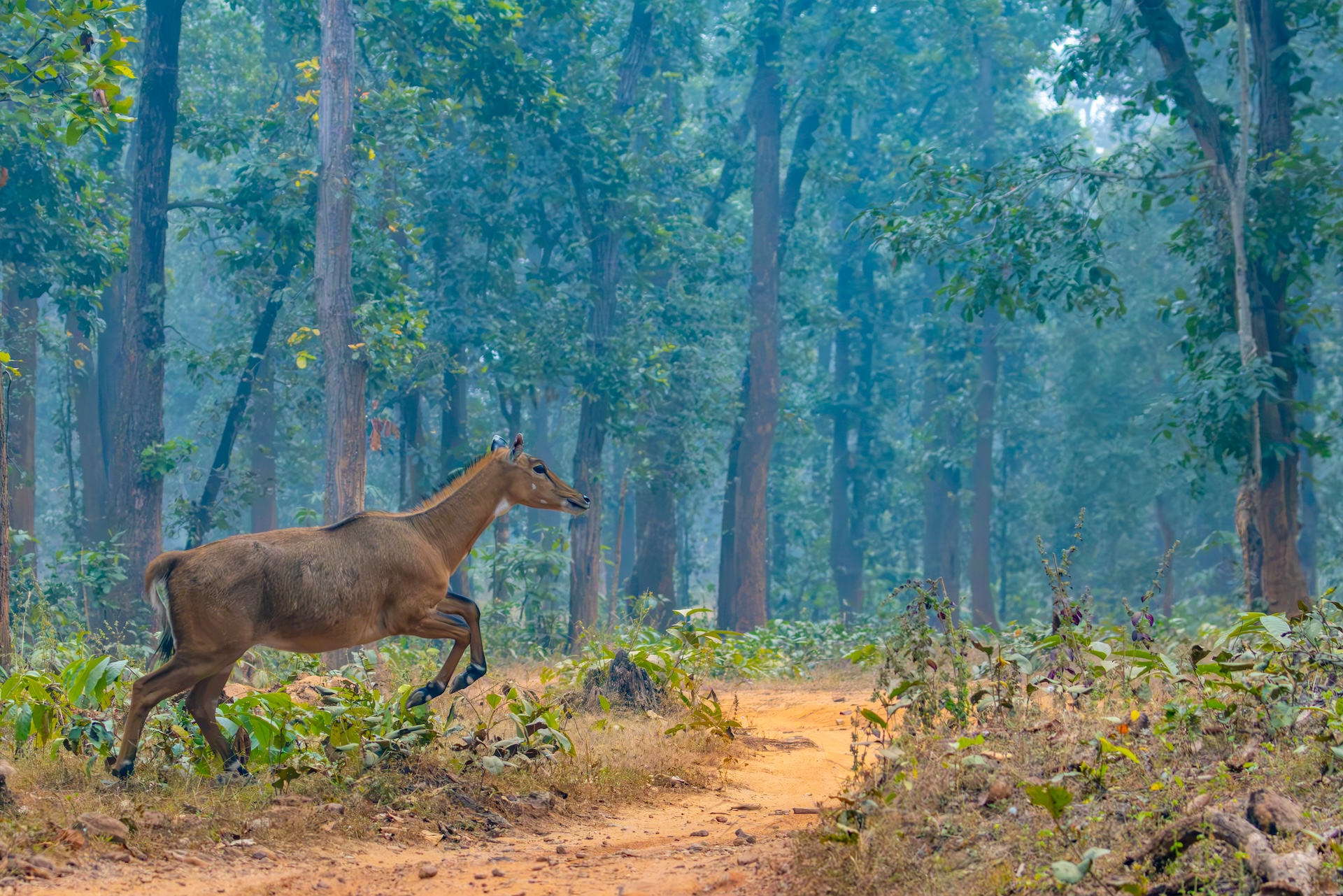
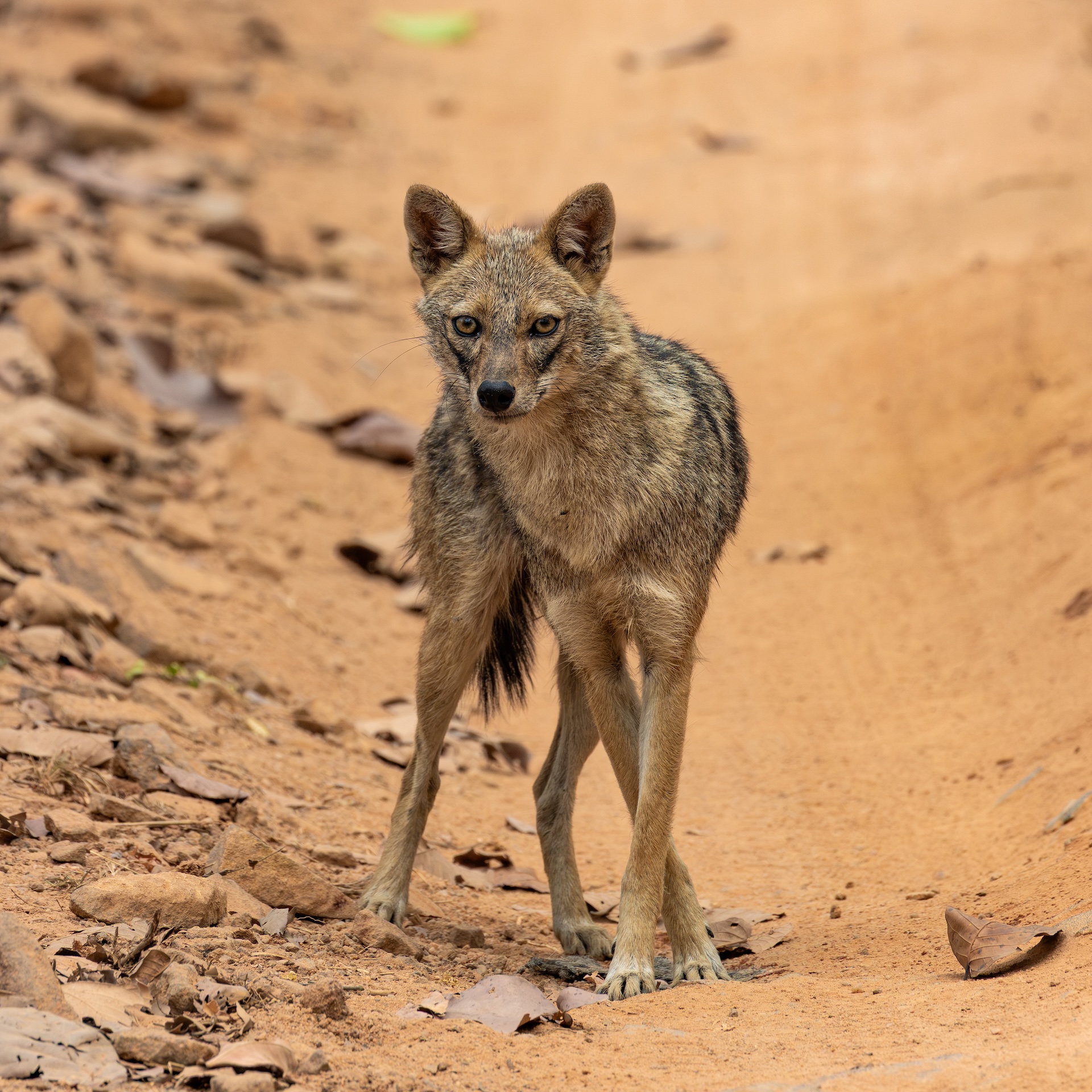
There were Indian gazelles, barking deer, sloth bears, jungle cats, jackals, spotted deer and blue bulls.
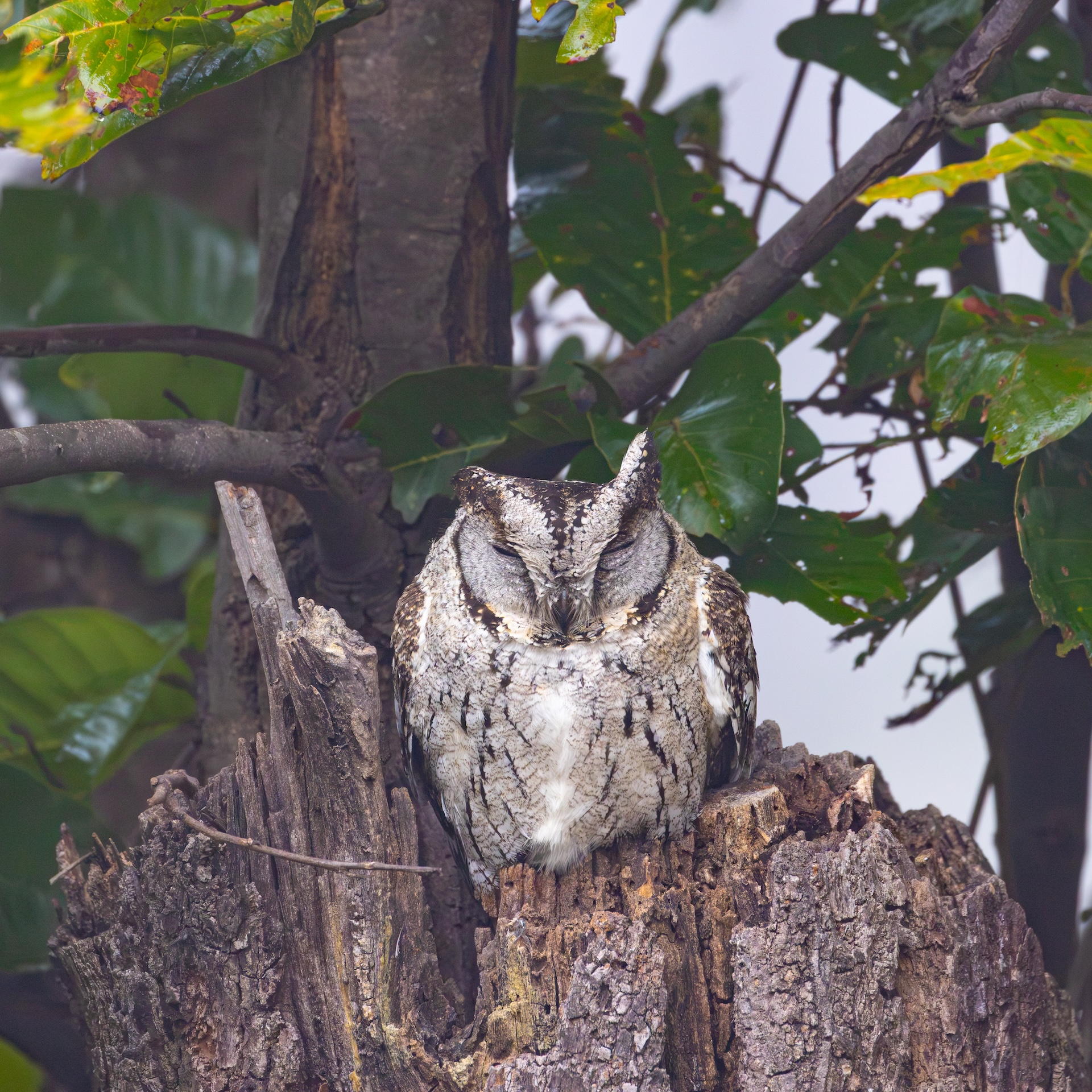
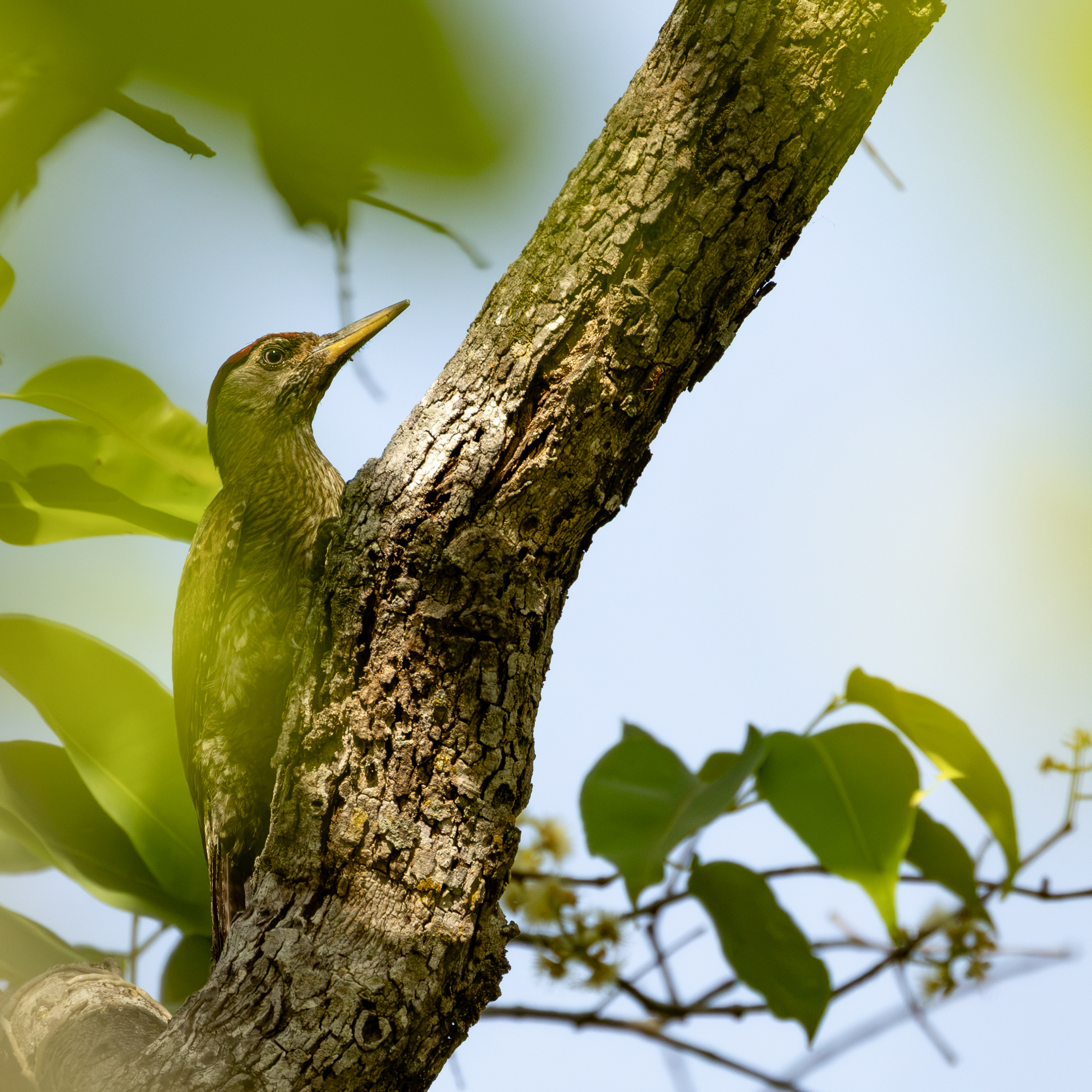
And then there were the birds.
Woodpeckers, eagles, paradise flycatchers, vultures, peafowl, owls, thrushes, flowerpeckers, storks and drongos, among many others.
Some sightings lasted only seconds.
Others allowed enough time to stop, observe and photograph.
And with every safari, the forest seemed to reveal another layer.
That, perhaps, is what kept bringing me back.
The tiger may be the headline.
But the forest is the real story.
What began in November 2024 as an unplanned stopover during a long road journey gradually became something much more personal—a relationship with a forest I had barely known existed.
Sanjay-Dubri does not announce itself loudly.
It does not need to.
It reveals itself slowly—to those willing to return, wait, watch and listen.
Twenty-five safaris later, I still enter the forest with the same curiosity I had on that first afternoon.
Only now, I know better than to dismiss what the caretaker tells me.
Because somewhere inside Sanjay-Dubri, there is always another story waiting.
And I still wonder—what will Sanjay-Dubri reveal today?
Acknowledgement
My sincere thanks to Mr. Dharmendra, whose continuous guidance, patience and intimate knowledge of the forest have enriched my many safaris in Sanjay-Dubri. His ability to read the forest, understand its rhythms and guide me through its varied landscapes has been an invaluable part of my journey through this remarkable wilderness.